
Candidates for Iowa Auditor of State met with Legislation Committee
September 14, 2026
By Grant Booth, CPA - Partner with Jacobsen & Company, LLP
ISCPA Legislation Committee
The ISCPA Legislation Committee welcomed the two major-party candidates for Iowa Auditor of State to its late August meeting. Republican Chris Cournoyer and Democrat Taylor Wettach are seeking to succeed current State Auditor Rob Sand, who is leaving the office to run for governor. Cournoyer and Wettach discussed their backgrounds, why they are running and how they would approach the Auditor's Office. Both also answered questions from committee members on technology, staffing, fraud prevention and working with Iowa CPAs.
Chris Cournoyer: efficiency, technology and collaboration
Chris Cournoyer currently serves as Iowa's lieutenant governor. She was first elected to the Iowa Senate in 2018 and served for six years before being appointed lieutenant governor in December 2024. During her time in the Senate, she chaired the Technology Committee and Education Budget Committee and served as vice chair of the State Government Committee. Before entering the legislature, she served two terms on the Pleasant Valley School Board, including time as board president.
Cournoyer's professional background is primarily in technology. She earned a degree in computer science from the University of Texas at Austin and began her career as a senior consultant with Andersen Consulting, now Accenture. She later spent more than 20 years as a self-employed website designer and developer and has also been involved in STEM education.
Much of Cournoyer's presentation focused on how that combination of technology, business and government experience would translate to the Auditor's Office. She pointed to her experience with technology and budget issues in the Iowa Senate, as well as Iowa's government realignment efforts. She sees the Auditor's Office as having a role not only in identifying waste, fraud and abuse, but also in finding ways government can operate more efficiently.
Technology was a major part of that discussion. Cournoyer talked about using data analysis and automation to better identify areas of risk and reduce manual processes. With a limited number of qualified accounting professionals available, she sees technology as one way to allow auditors to spend more time on work requiring professional judgment.
That tied into a broader discussion about the accounting workforce. Cournoyer acknowledged the difficulty of recruiting accountants into government and discussed education, mentoring and developing a stronger pipeline into accounting and auditing careers.
Cournoyer was also straightforward about not being a CPA herself. She told the committee that CPAs are the accounting experts and said she would rely on the professionals within the office and the broader CPA community for that expertise. She discussed working with private CPA firms and maintaining a collaborative relationship with ISCPA.
She also acknowledged that relationships between the Auditor's Office and other parts of state government have at times become adversarial. Cournoyer said she would like to improve communication and trust while still carrying out the responsibilities of the office.
Overall, Cournoyer emphasized efficiency, technology, workforce development and working with the CPA profession. Her presentation focused on how her experience in technology, management and state government could be applied to the operations of the Auditor's Office.
Taylor Wettach: independence, accountability and the rule of law
Taylor Wettach is an attorney and seventh-generation Iowan from Muscatine. He attended Georgetown University's School of Foreign Service and later graduated from New York University School of Law. His earlier career included work in international economic and policy issues before joining Simpson Thacher & Bartlett, a large international law firm.
At Simpson Thacher, Wettach worked on capital markets, international trade, regulatory and national security matters, including complex corporate transactions and work involving businesses and the federal government.
Wettach directly addressed the fact that he is an attorney rather than a CPA. He said his legal career has required him to understand complex transactions, review financial information and work with accountants and other financial professionals. He views that experience as complementary to the accounting expertise within the Auditor's Office.
A major theme of Wettach's presentation was independence. He discussed legislation passed in 2023 that limited the Auditor's access to certain state information and argued that the office needs to be able to protect taxpayers regardless of which party is in power.
When asked about the sometimes adversarial relationship between the Auditor's Office and the Legislature, Wettach discussed the political environment surrounding current Auditor Rob Sand, Iowa's only Democratic statewide elected official during a period of Republican control of state government. While speaking positively about Sand's tenure, Wettach said he would work to maintain the office's independence while building a more productive relationship with lawmakers. He joked that one advantage in doing so was simply "not being Rob Sand," describing his candidacy as an opportunity for a fresh start while keeping the Auditor's Office focused on its nonpartisan oversight role.
Wettach also discussed how his legal background could be useful when audits uncover potential fraud or other legal issues. He noted that accounting issues can sometimes develop into legal matters and believes his experience could be useful when that occurs.
Technology and staffing were also part of his presentation. Wettach discussed artificial intelligence, targeted data analysis and automation as ways to reduce manual work and allow staff to spend more time on analysis and investigations. He also acknowledged the difficulty of attracting qualified accountants into government.
When asked about working with ISCPA, Wettach said he wanted an active and open relationship with the profession. He described private CPA firms as important partners in government auditing and said he would look to CPAs for input and expertise.
Overall, Wettach emphasized independence, taxpayer accountability, legal and financial oversight, technology and collaboration with CPAs. His presentation focused on how his legal background could complement the accounting expertise of the office while maintaining its independent oversight role.
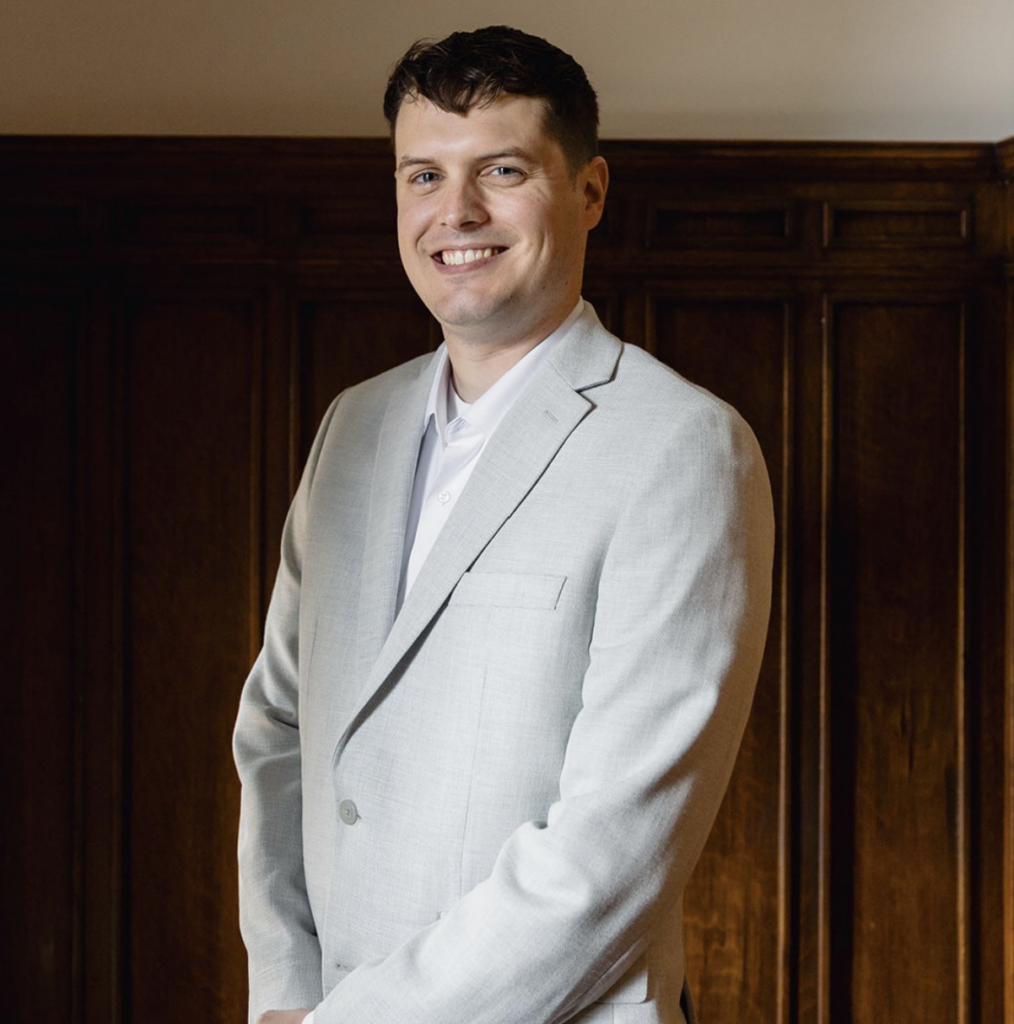
Grant Booth is a CPA and partner with Jacobsen & Company, LLP in Des Moines and has been an ISCPA member since 2017.